


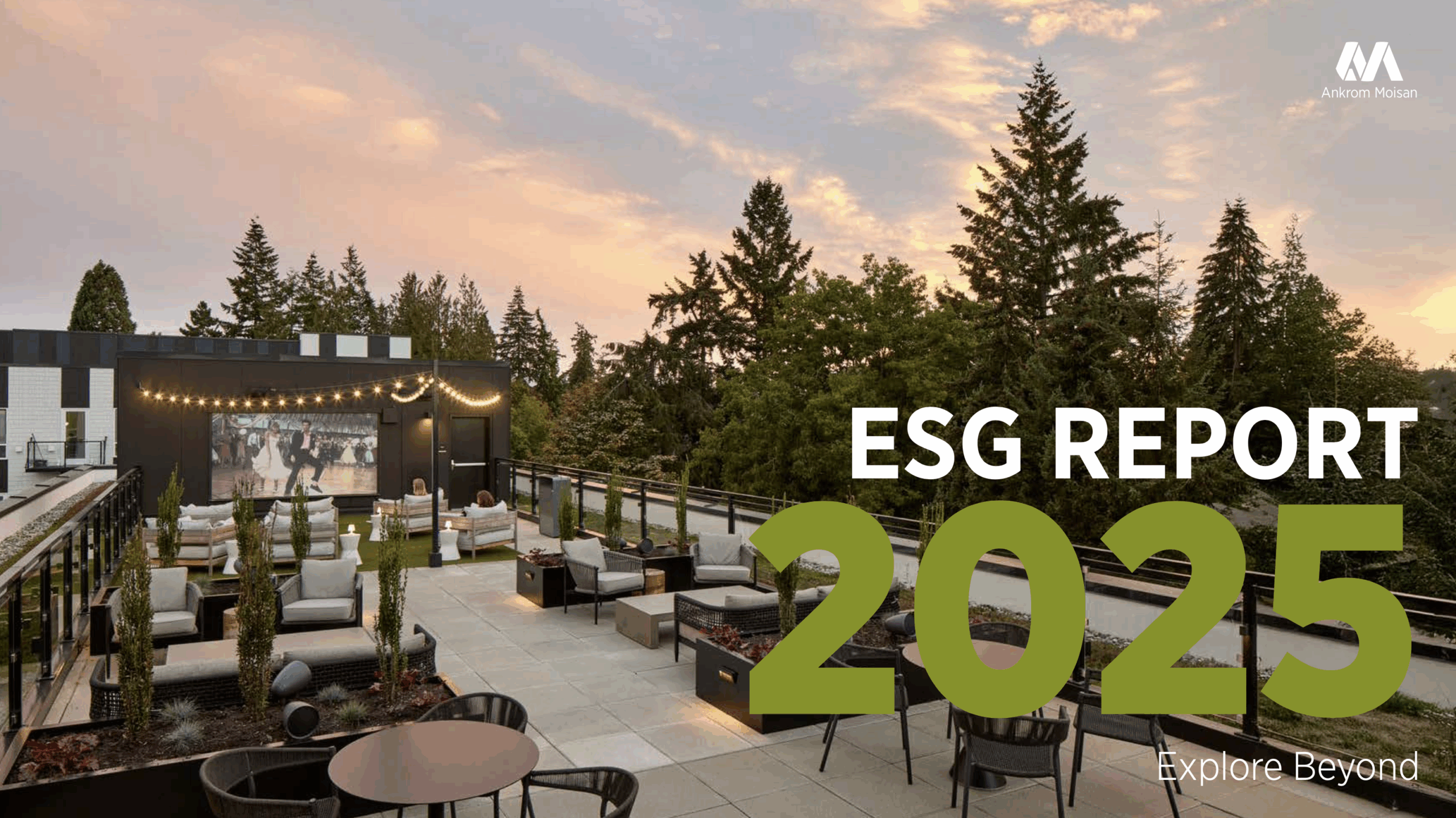
Great design has the power to shape healthier, more vibrant, and more equitable communities. At Ankrom Moisan, it’s our goal to leverage our design experience and expertise to create a more sustainable, equitable future.
As an employee-owned firm, we hold ourselves accountable not only for financial health and design excellence, but also to a broader responsibility: building a practice that serves people and the planet for generations to come.
Containing key information about how the firm operates, the 2025 Ankrom Moisan Environment, Social, and Governance (ESG) Report is the first of its kind for the firm. We have always done this type of work and have wanted to highlight our efforts in these areas for some time, and given the evolution of the firm, its governance, and our goals, that time is now.
The 2025 ESG Report reflects a maturity in our internal systems and a renewed commitment to transparency. It highlights our priorities, our internal initiatives, and the commitments that guide our actions, and reveals how we organize, support, and empower our people, sustainability strategies, DEIB values, team member enrichment, and projects.
Led by Dani Murphy, the committee tasked with pulling this report together included cross-functional committee members from ELT and SLT like Cindy Schaumberg, Jason Jones, Alissa Brandt, and Rachel Fazio, as well as individuals from the DEIB Council and Practice team; Amanda Lunger, Ferdilyn Ramirez, Erica Buss, Cara Godwin, Filo Canseco, and Angela Tocchi.
Gathering stories, data, and examples from across the firm, the process of compiling this report challenged us to take stock of what we’ve achieved in the past, as well as what we’re doing well now, like the high number of women in leadership roles throughout the firm. It also gave us a fresh perspective on where we have room to grow, providing a clear road map on how we can continue to evolve and deepen our impact.
How the ESG Report is presented was another major component of the initiative. According to Filo Canseco, there was an intentional push to integrate user experience and user interface-centered design into the report, to guide the reader through our story. “The project involved in-depth exploration of effective layout strategies and the emotional impact of color choices,” he said. Having a sleek, design-forward presentation was something that Dani emphasized as well, saying how “as a design firm, the report had to visually reflect who we are. When we can combine this information in a design-forward way, it makes it more digestible for everyone.”
Click here to see the full 2025 ESG Report
This first report is just a beginning. As a living, breathing document that will be updated annually, it establishes a framework that will guide the firm’s success for decades to come.
Reflecting on the nine-month cross-department collaboration that led to the completion of the report, Dani said that it’s “inspiring to have released our first ESG report, but I imagine this first one will look a lot different than what we can accomplish in the next decade.” Murray Jenkins, Ankrom Moisan President, similarly set his sights on the future of the firm that was outlined in the report, stating that he “looks forward to strengthening our governance and culture in ways that set the next generation of leaders at Ankrom Moisan up for success.”
The first ESG Report marks the beginning of a more intentional and transparent journey. By documenting our progress, and our challenges, we’re committing to measurable action, deeper accountability, and a future where Ankrom Moisan continues to inspire and empower people to explore beyond the expected. We look forward to building on this foundation and strengthening our culture, governance, and impact for the next generation of leaders and the communities we serve.
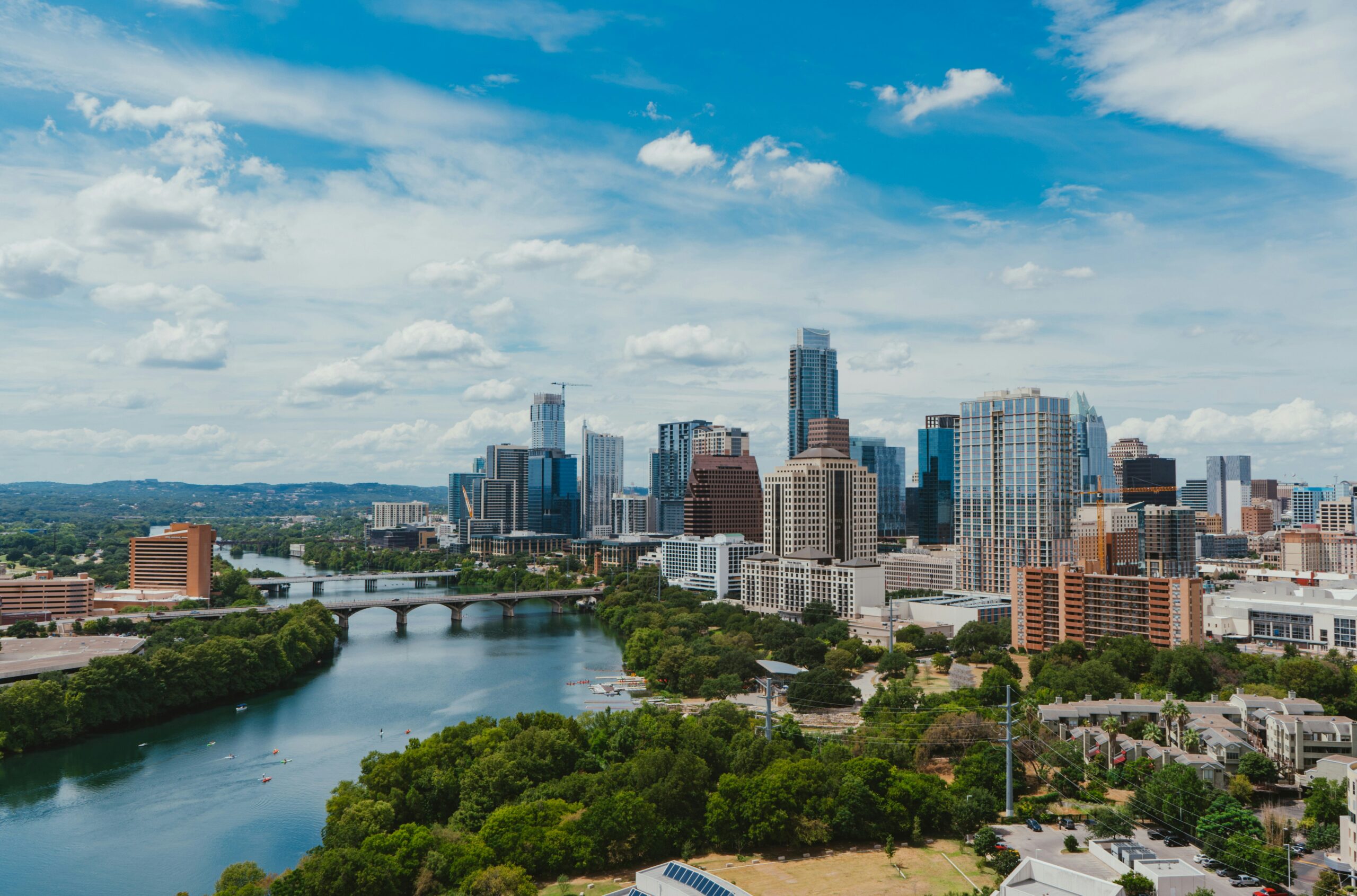
Ankrom Moisan Opens New Office in Austin, Texas
We are expanding our footprint and opening a new office in Austin, Texas.
Led by Principal Jason Lamb, our new Austin office will leverage our expertise in all types of multifamily housing to meet the city’s most urgent design and housing needs. The office will focus on urban redevelopment, amenity-forward multifamily housing, and environmentally conscious wellness-oriented neighborhoods that capture the local identity while advancing energy performance and equity goals.
“Austin’s energy, innovation, and entrepreneurial spirit align perfectly with who we are as a firm,” said Lamb. “Our approach is deeply rooted in partnership, and we work closely with all stakeholders to design spaces that reflect community character while also accelerating leasing and maximizing long-term return on investment. This new office allows us to bring that collaborative model to one of the most exciting markets in the country.”
“Developers today are looking for design teams who can not only envision great spaces but also deliver them efficiently and responsibly,” said Murray Jenkins, President of Ankrom Moisan. “By establishing roots in Austin, we’re expanding our ability to help clients navigate entitlement challenges, achieve design differentiation, and meet the region’s urgent housing needs.
We couldn’t help but notice some striking similarities across our four office locations. Portland, Seattle, San Francisco, and Austin all boast rich live music and creative scenes, world-renowned foodie cultures, hubs of technology and innovation, connections to the outdoors, and iconic bridges. All are proudly local. And now, all have Ankrom Moisan.
Contact us:
Designing Communities that Move People
With over 100 successful transit-oriented design (TOD) and podium projects completed across the West Coast, Ankrom Moisan has shaped vibrant, walkable, transit-connected communities that transform underutilized land into thriving mixed-use neighborhoods. Our expertise extends across scales – from strategic district-wide frameworks to detailed building design – with a track record of delivering catalytic projects for agencies like Tacoma Housing Authority, Hines, Clark Country Transit, and the City of Beaverton.
Our approach balances visionary planning with pragmatic execution. We begin with transit-adjacent development (TAD) opportunities and help them evolve into fully transit-oriented communities (TOCs) by integrating long-term growth strategies, inclusive public engagement, and equitable housing solutions. We don’t just design buildings near transit – we cultivate places where people live, work, and thrive without needing a car.
Our clients rely on us to:
Lead complex, multi-agency stakeholder engagement processes.
Maximize land value and development potential while preserving transit function.
Prioritize community needs through housing diversity and public realm activation.
Deliver cost-effective, code-smart podium solutions at scale.
To accomplish these goals, we’ve put together a list of five do’s and don’ts for designing successful, impactful transit-oriented developments.
DO Create Mixed-Use, Mixed-Income Neighborhoods. DON’T Build Monocultures that Ignore Economic Diversity
TODs should support a full spectrum of incomes and uses, from market-rate and affordable housing to live/work spaces, retail, and employment hubs. This mix increases transit ridership, reduces car dependence, and promotes economic vitality. Oliver Station in Portland is a standout example – it’s a mixed-use, transit-adjacent project that blends affordable and market-rate housing atop ground-floor retail, directly adjacent to the MAX light rail line. It reconnected a fragmented streetscape and brought needed density, amenities, and equity into a rapidly evolving neighborhood.

Aerial view of the mixed-use Westgate neighborhood in Beaverton, Oregon
DO Prioritize Public Engagement and Local Government Buy-In. DON’T Underestimate Community Concerns or Political Will.
Early, sustained engagement reduces resistance and aligns stakeholders. At Fisher’s Landing, a robust outreach strategy informed a district-wide plan grounded in local values and transit requirements. We collaborated with the public, city leaders, and the transit agency to align development goals with long-term community interests, resulting in a flexible, phased vision that maintains transit operations while introducing new housing, amenities, and economic opportunity.
DO Design for Walkability, Safety, and Connectivity. DON’T Treat Transit as an Island.
TODs thrive when the pedestrian experience is seamless. Wide sidewalks, active frontages, street furniture, and visible transit connections are non-negotiable. Our Westgate framework plan in Beaverton placed a “100% corner” at the intersection of key pedestrian and transit axes, designing it as a vibrant focal point with active ground floors on all corners. This approach created a true urban node that strengthens both walkability and transit access.
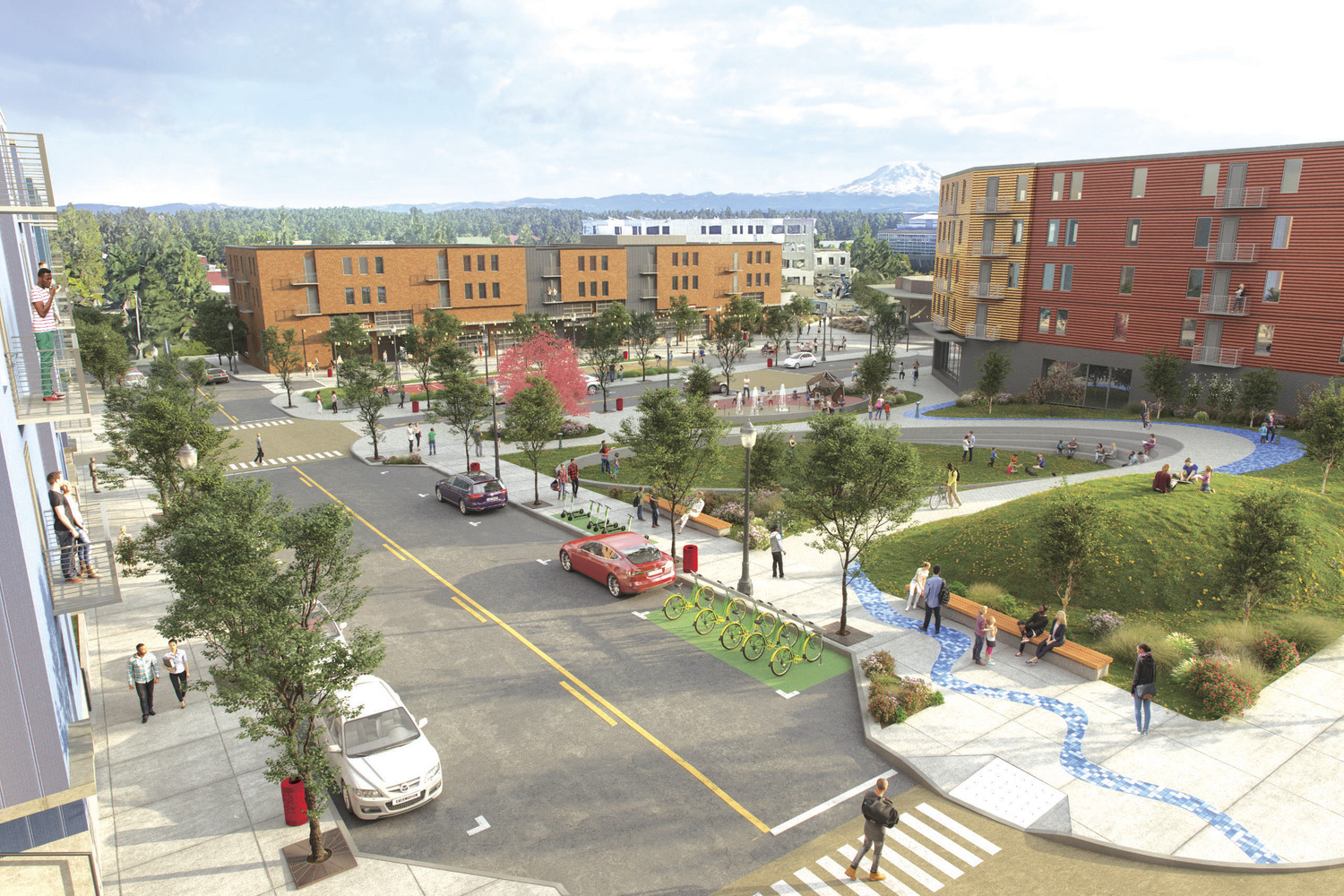
Rendering of James Center North in Tacoma, Washington
DO Future-Proof Parking and Mobility Strategies. DON’T Let Surface Parking Define the Site.
Smart TODs transition from car-centric layout to multimodal systems over time. Through our mobility charrette at James Center North, we worked with local agencies to reimagine parking as a flexible urban element – initially essential, but adaptable to evolving shared mobility trends. Rather than relying on traditional fixed ratios, our plans allow parking to phase out in favor of programmable space, micro-mobility lanes, or active frontages as transit demand grows.
DO Activate the Public Realm with Purposeful Design. DON’T Leave Edges Dead or Space Underutilized.
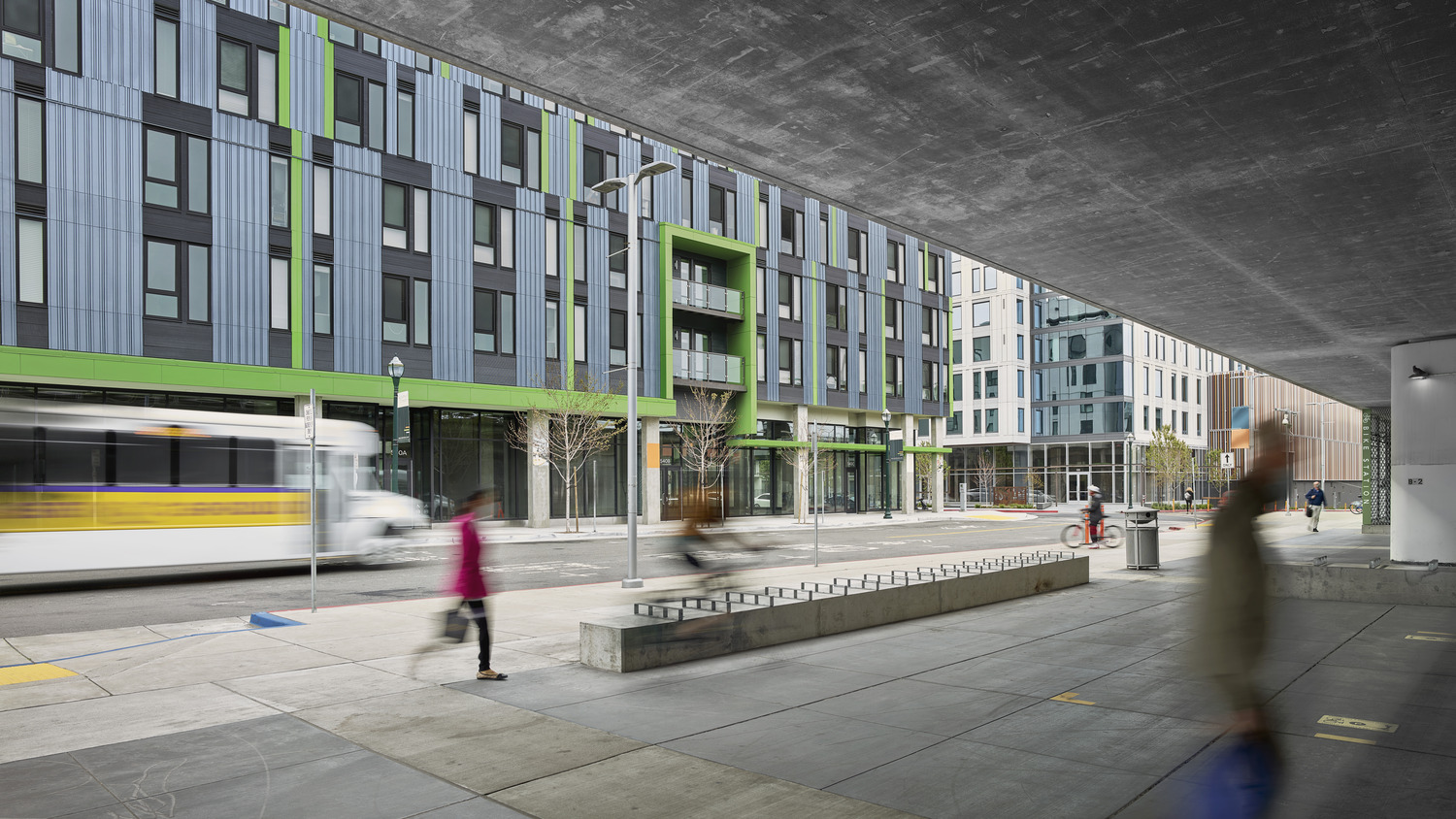
Every surface counts in a TOD. Thoughtfully designed public spaces, transparent ground floors, and flexible plazas invite people to linger, connect, and return. The MacArthur Station project in Oakland is a prime example. Our design team created a central public heart at the BART station, anchored by active frontages, inviting walkways, and diverse open spaces that encouraged continuous activity and movement. Visual connections, lighting, and building orientation enhanced safety and navigability, while the public realm was designed as a true civic stage, welcoming residents, commuters, and visitors alike. The result is a fully integrated 8-acre community with 880 homes and 40,000 square feet of retail, deeply embedded in the region’s transit fabric.
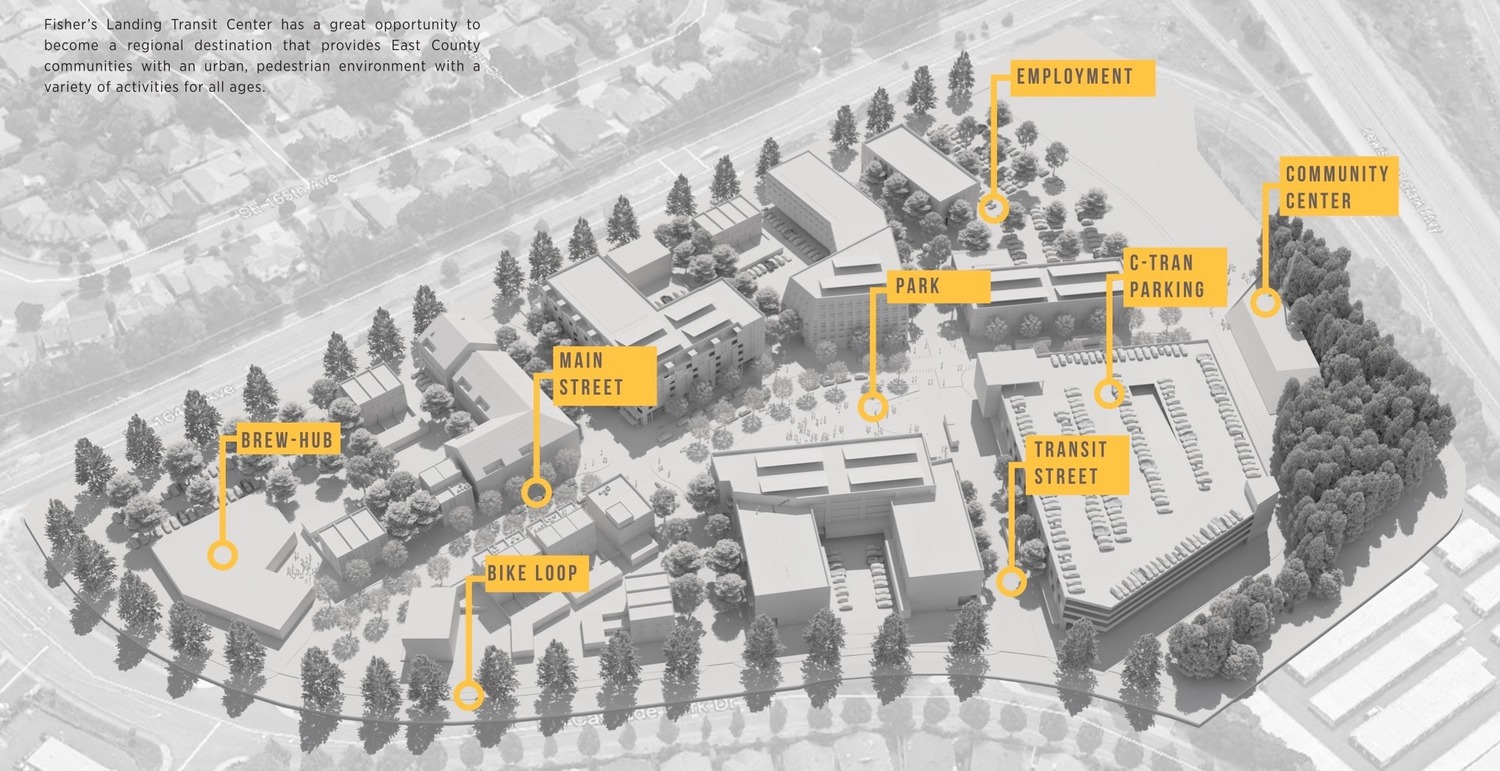
Master Plan for Fisher’s Landing in Vancouver, Washington